Since most Hui people are Muslims, they follow the Islamic calendar, which is a lunar calendar that has 12 months and 354 days in each year. This makes their years 11 days shorter than our Gregorian calendar and so they have to wait less time between festivals! The three main festivals are all religious and are known as Eid al-Fitr, Eid al-Adha, and Mawlid an-Nabi.
Eid al-Fitr
During the ninth month of the Islamic calendar, the Hui observe a religious practice known as Ramadan. Throughout Ramadan, men older than 12 and women older than 9 must fast during daylight hours and can only eat and drink once it is dark (i.e. before sunrise and after sunset). It is practised during the ninth month because, according to the Quran, this is when Allah bestowed his teachings upon the prophet Mohammed, meaning this is the most sacred month in the Islamic calendar.
Muslims fast during Ramadan in order to experience starvation and thus empathise with those less fortunate. Just imagine hungrily watching your co-worker eat a McDonalds, knowing that you have to wait another 8 hours to eat, and you’ll understand just how challenging this is! Once the fasting has ended, they celebrate a three-day long festival known as Eid al-Fitr. It begins on the 1st day of the 10th month and each person will get up early in the morning, take a bath, and thoroughly clean their house and surrounding streets. They then light incense and head to the mosque in their formal clothes, where they will attend a religious service and listen respectfully to the imams giving lectures and sermons.
Once these are completed, they must go to their family’s cemetery and hold activities in honour of their ancestors. The family will then gather together and make traditional food such as fried dough pastries and fried cakes. Alongside these fried delicacies, they will prepare a feast of chicken, mutton, beef and braised vegetables, which will be shared with relatives, friends and neighbours as a sign of goodwill. After a month of fasting, it’s a small wonder that anyone has the patience to prepare food and not just wolf down the raw ingredients! The following two days of the festival are celebrated with feasts, lion dances, wrestling, and all manner of entertainment. As this is considered an auspicious occasion, many Hui youths will also get married during this festival.
Eid al-Adha
The term “Eid al-Adha” means “sacrifice and self-devotion” in Arabic, so it is unsurprisingly also known as the Feast of Sacrifice, and the Festival of Fidelity and Filial Piety. It is a four-day festival that begins on the 10th day of the 12th month according to the Islamic calendar and revolves around the sacrifice of an animal, usually an ox, which people will divide into three portions. The first portion of meat is given to family members, the second is gifted to relatives, friends, and neighbours, and the final portion will be used as alms to help the poor. The older family members boil the meat and inform the children that, after they have finished eating, they must bury the bones underground and cover them with yellow earth instead of giving them to dogs.
They traditionally sacrifice animals during this festival in homage to the ancient prophet Ibrahim. According to the Quran, Allah spoke to Ibrahim and ordered him to sacrifice his son Ishmael. Ibrahim sharpened his knife and approached his son, but relented and begged his son to leave. However, Ishmael told his father that, if it was the will of Allah, then he must be sacrificed.
Ishmael lay down in acceptance of his death and Ibrahim felt tears stream down his cheeks as he placed the knife on his son’s throat. At that moment, Allah stopped Ibrahim and provided him with a “greater sacrifice” than Ishmael, although it is never explicitly mentioned what this sacrifice was. This festival honours both Ibrahim’s devotion to Allah and Ishmael’s filial piety in obeying his father without hesitation.
During the festival, most families will host a gathering and share a feast of beef, mutton, fruit, fried cakes and other delicious dishes with their relatives, friends, neighbours, and sometimes local imams.
Mawlid An-Nabi
The prophet Mohammed is believed to have been born and died on the same day so this festival commemorates both his birthday and the anniversary of his death. It takes place on the 12th day of the 3rd month according to the Islamic calendar. During the festival, Muslims will go to the mosque, chant scripture from the Quran, send their blessings to Mohammed and his family, and listen to lectures by imams on the life of Mohammed. Once the religious ceremony has finished, they will donate grains, edible oil, meat, and money to the mosque.
For one day only, they will take charge of maintaining the mosque by helping to mill flour, purchase groceries, fry cakes, boil meat, cook delicious dishes, and perform all other daily chores. They all volunteer readily for these jobs as they consider this festival to be a particularly auspicious day to perform good deeds. When the work has been completed, people will gather together to enjoy a feast. In more affluent areas they will have huge gatherings, with dozens of tables laden with dishes for everyone to enjoy!

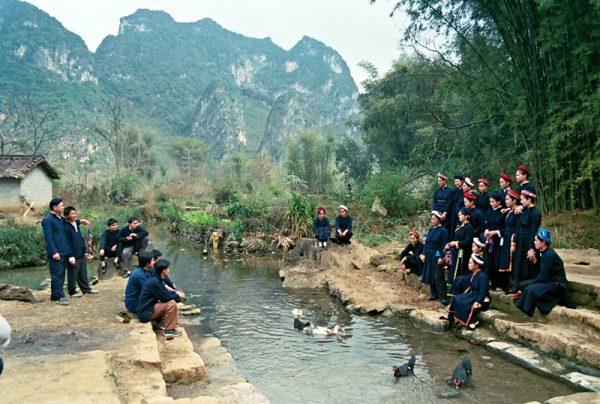 One of these ancient legends has garnered much attention in recent years and is known as “Dahgyax Dahbengz” or “The Orphan Girl and the Rich Girl”. This is essentially an early version of the Cinderella story and has been found in old Zhuang opera scripts. Several written versions of the story date back to the 9th century, although it could be even older! Songs like these are often refined over a period of several years. For example, the “Song to Tell Others”, which is a philosophy on life, originated during the Sui Dynasty (581-618) but its final form wasn’t set until the late Ming Dynasty (1368-1644).
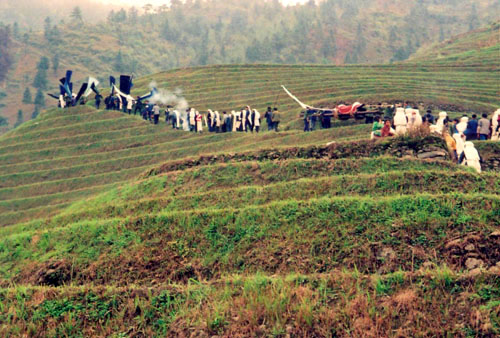 These superstitions play a focal role in Zhuang funerals, as they believe that the souls of the deceased enter the netherworld but continue to assist the living. Ancestor worship is common and their burial rites are particularly unusual, as the dead are buried twice. The deceased is first wrapped in white cloth and, after three days, they are buried in a coffin along with a few of their favourite things. A Taoist priest or local shaman will preside over the funeral, depending on the family’s beliefs. Families will sometimes even arrange what is known as a “spirit marriage” to appease the souls of those who died unmarried!
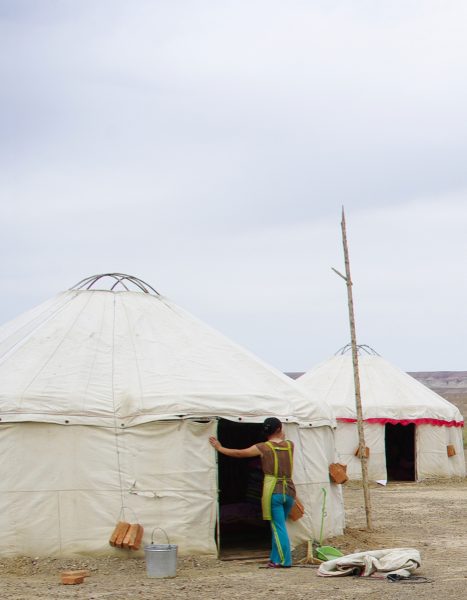 Nowadays, most Mongols live in modern apartment blocks or fixed residences. However, you’ll still find plenty of Mongol people maintaining their nomadic heritage and living on the grasslands in a type of portable domed tent known as a ger or yurt. Some people even alternate between the two; living in urban housing for part of the year and then shifting to a ger in order to tend to their livestock. The use of these unusual abodes dates back to the time of the mighty Genghis Khan, roughly around about the 12th century. With their bright white exteriors and perfectly rounded shape, these magnificent gers look like glittering pearls scattered across the jade-hued grasslands.
 The Miao people celebrate a different New Year’s Day to that traditionally adhered to in China. It falls sometime during September to October according to the their lunar calendar. However, there is no exact date for the New Year’s Day each year and the official date is only announced two months prior to the festivities. In southeast Guizhou, the Miao community celebrate their New Year Festival on the “Rabbit Day” or the “Ox Day” of the lunar calendar according to ancient Miao tradition. During the New Year festival, women will wear traditional clothes and there will be large parades. The locals will celebrate by beating drums, dancing to the music of the lusheng, horse racing and sometimes horse fighting or bull-fighting.
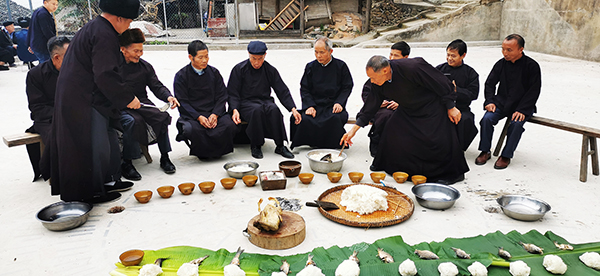
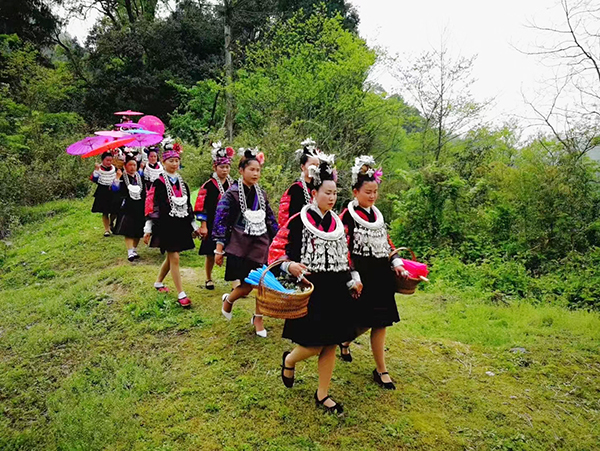 The Sister’s Meal Festival is considered to be the oldest version of what we know as Valentine’s Day. It is a favourite festival among the Miao communities in the Guizhou counties of Taijiang and Jianhe. It is celebrated from the 16th to the 18th of March according to the Chinese lunar calendar. Before the festival, Miao girls will go to the mountains to gather wild flowers and leaves, which are used to make coloured dye. This dye is used to make glutinous rice known as “sister’s rice”. When the festival begins, the Miao girls will adorn themselves in their finest silver jewellery and meet by the banks of a river to make “sister’s rice”. They dye the rice blue, pink, yellow and white to represent spring, summer, autumn and winter respectively.
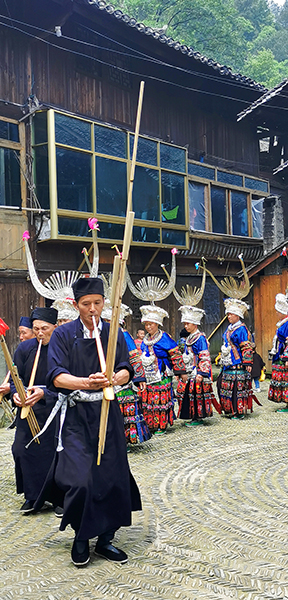 The Lusheng Festival is considered the most significant of all the Miao festivals and is celebrated widely throughout Guizhou, Yunnan and Sichuan. It is celebrated from the 16th to the 20th day of January according to the Chinese lunar calendar. During the Lusheng Festival, Miao people from surrounding villages will all come together in traditional dress and the men will all bring their lusheng. The men will play the lusheng whilst the women dance. They believe that this ceremony will bring a good harvest and good health to the people in the coming year. However, the festival is not simply about playing the lusheng and also features other activities typical of the Miao, such as singing, bullfighting, and horse racing.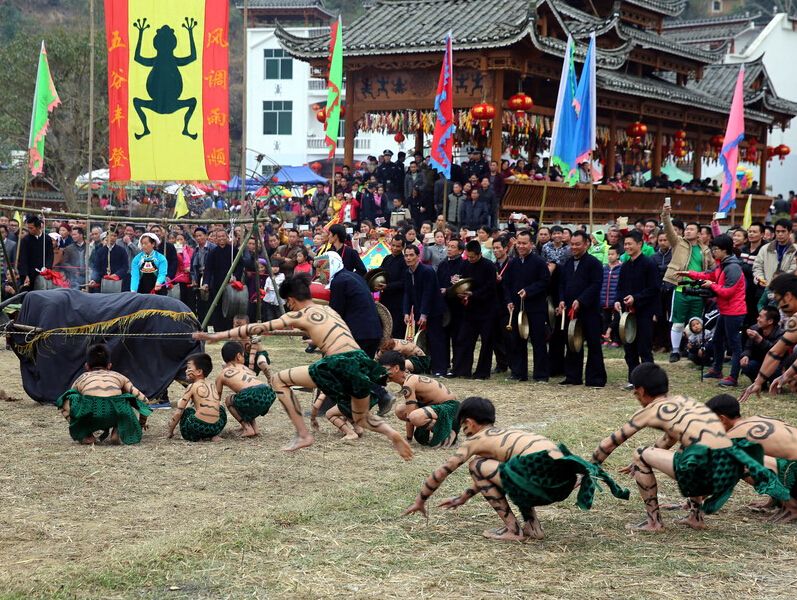
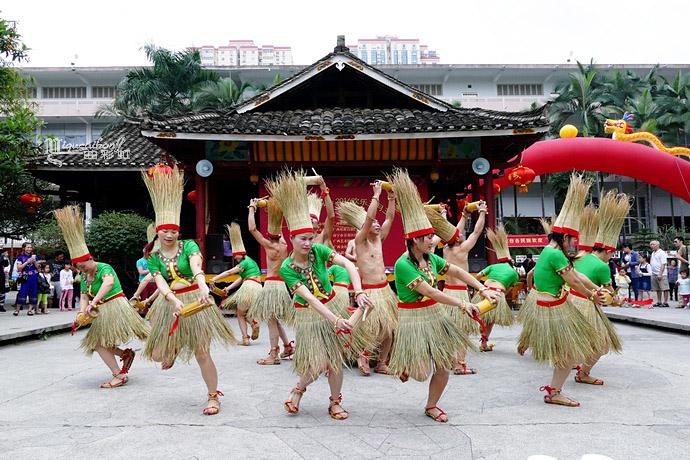
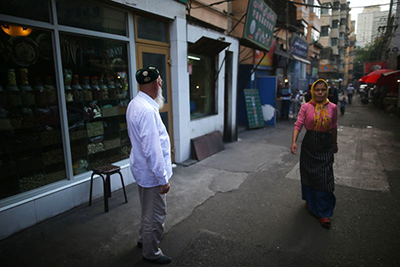 The customs and taboos of the Uyghur ethnic minority have been informed primarily by their rich history and their pious belief in Islam. When receiving guests, the host will typically offer them the best seats, treat them to some tea or milk, and then provide them with some small snacks, such as dried fruit or sweetmeats. If you are offered a drink, be sure to take the cup with both hands as this is a sign of courtesy. The same applies if you are being offered a gift.